
Solar Power Systems Identified
Solar Power Frequently Asked Questions
- How do solar electric systems work?
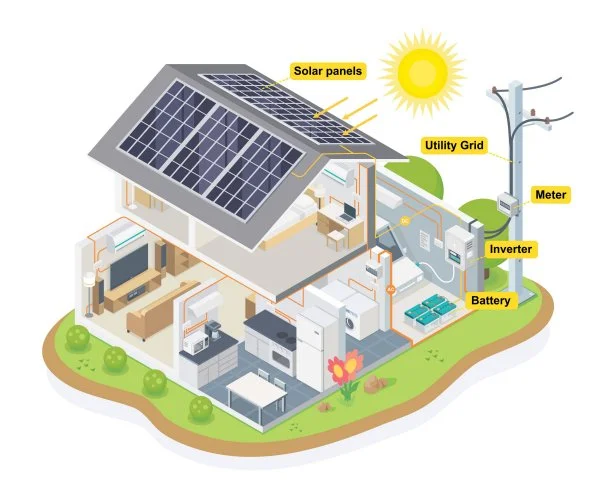
Solar photovoltaic (PV) panels convert sunlight into direct current (DC) electricity. An inverter then transforms that DC electricity into alternating current (AC) electricity so you can power your home appliances or send excess power back to the grid. - Will my solar panels work during a power blackout?
Most standard grid-tied solar systems automatically shut off during a blackout for utility safety reasons(UL1741). To keep power during an outage, you need to add a backup battery system for storage. - Will I still get an electric bill after going solar?
Yes. You will usually still receive a monthly bill from your utility company. This covers basic grid connection fees, infrastructure maintenance, or any extra energy you use from the grid at night or on cloudy days when your panels aren’t producing power. - How long does the solar installation process take?
The physical installation on your roof typically takes less than a week for homes (or 3-6 weeks for commercial buildings). However, the entire process—including custom design, HOA approval, city permits, and utility inspections—takes about 3 to 6 months.
- Are my solar panels turned on immediately after installation?
After installation and your local city (AHJ, Authority Having Jurisdiction) and the Utility company inspects the system for safety, the utility company grants PTO (Permission to Operate), your solar electric system will be turned on forever and will immediately start producing power.
Maintenance & Warranties
- What kind of maintenance do solar panels require?
Solar systems require very little maintenance. They have no moving parts. You just need to keep them clean of heavy dust or debris, trim nearby trees to avoid shade, and periodically check your digital monitoring app.
- What payment options are available?
-
- Cash: Pay in milestones (e.g., a deposit, pre-installation payment, and final balance upon PTO).
- Financing: Loan options with varying terms, sometimes low monthly rates or zero-down plans.
- Leasing / Power Purchase Agreement (PPA): A third party owns the equipment, and you pay a lower rate for the energy it produces. This usually last for 15 years and then you have no more payments after it is paid off.
How do you determine what size system I need?
A Solar Electric Freedom consultant will review your annual power consumption (kilowatt hours used), the energy efficiency of your home, and your financial goals. We analyze the tilt exposure to the south to determine what size (kilowatts of power) will best meet your needs.
What does PV stand for?
Photovoltaic—The process of converting light energy to electricity.
What is “net-metering”?
Net-Metering is a key component for a grid-tied system. It will include a meter which will be provided and installed by the utility company. This will record energy production (reverse direction) and energy consumption (forward direction).
If are all solar panels the same, how do we choose?
- Tier 1
- BiFacial
- Bankable
- CEC List approved
The major differences in solar cells are their efficiency, quality, and applications. The difference between installing one over the other would depend on the size and space available for the panels.
What does the inverter do?
The inverter converts and manages Direct Current (DC) from the panels to Alternating Current (AC). It synchronizes the solar power energy with the electricity coming from the grid into the house.
What 4 critical components are found in all interconnected systems?
- PV modules; aka solar panels or solar modules
- Inverter; the use to convert DC to AC
- Bi-directional meter
- Quality design, materials and installation, which can be found in abundance with Solar Electric Freedom.
Solar Benefits You Can See

We check with the federal, state, and local government offices for rebates and incentives that can be applied to your needs.
We can show you how much will your property value increase while your utility bills decrease. Solar panels not only help with reducing your utility bills, but can also increase your property value.
You will be able to monitor how much you are saving — both in your pocket, and in the environment. We’ll set you up with eGauge, and you can see the productivity of your solar solution.